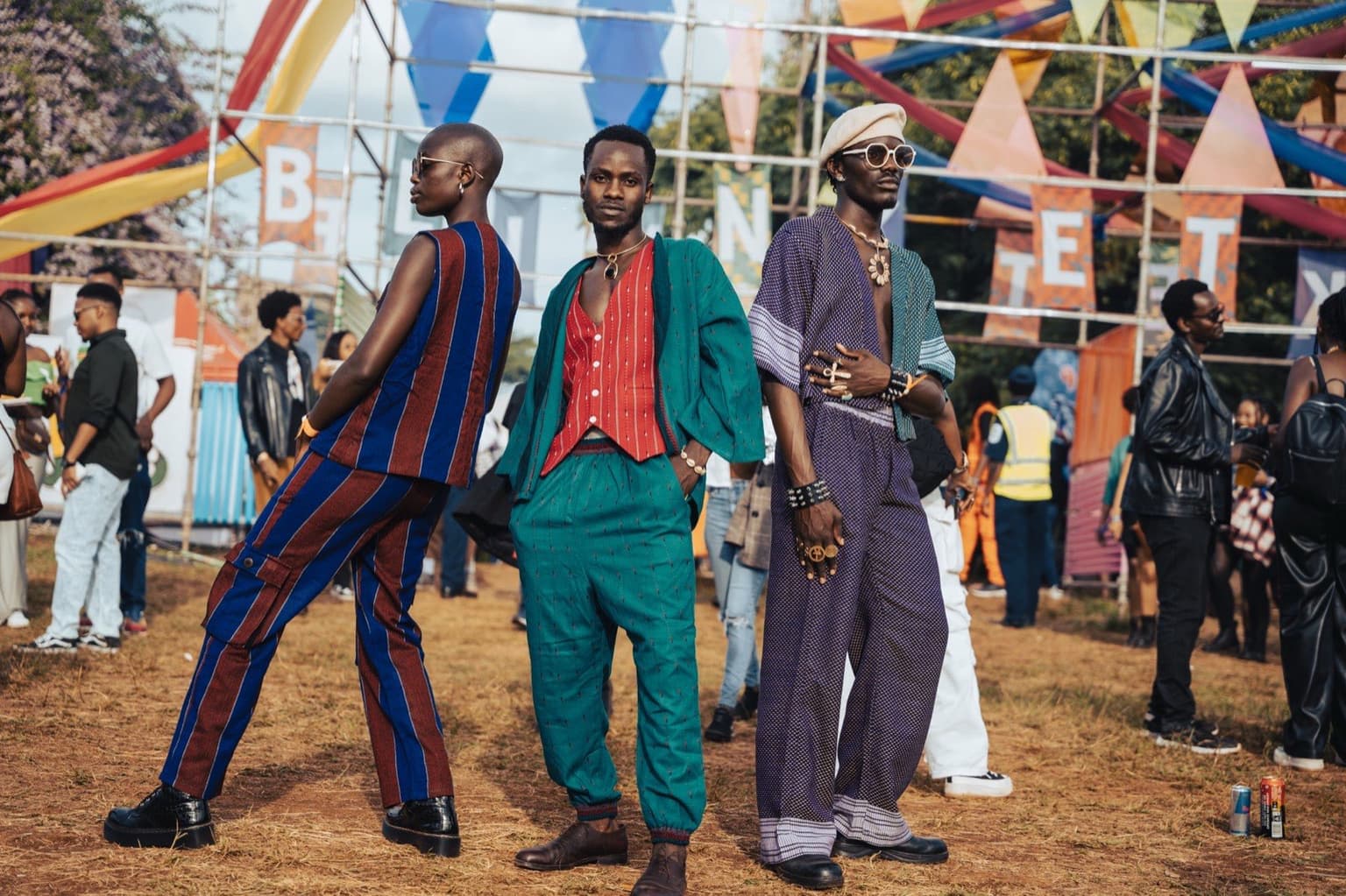
Materials & Heritage
These fabrics have names,
origins, and stories.
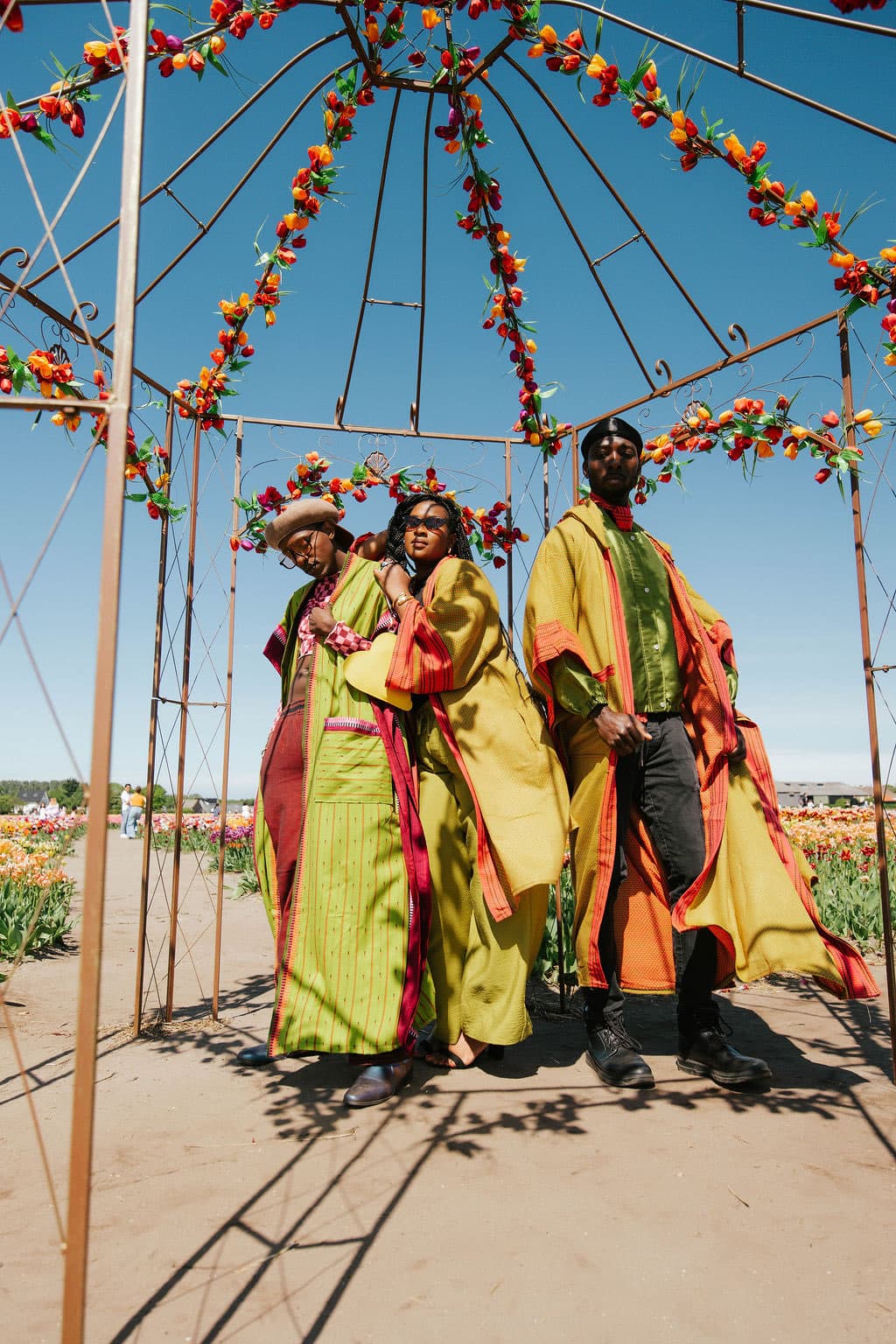
We don't use “materials.” We use textiles with lineage — sourced from weaving communities across Kenya, Tanzania, and Uganda. We push the design limits of what these textiles can become.
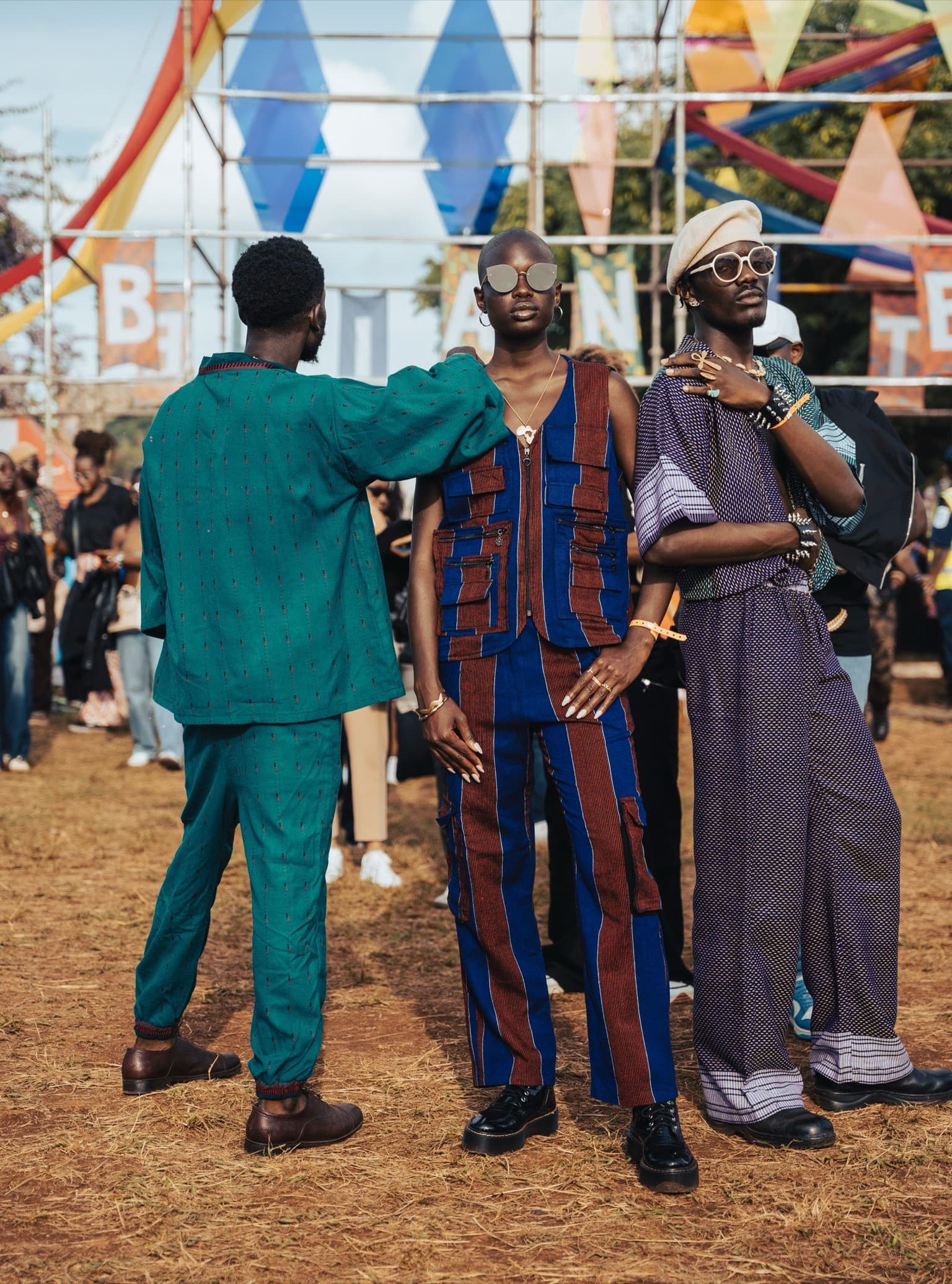
Kikoy
(Kikoi)Swahili Coast — Lamu, Mombasa, Zanzibar
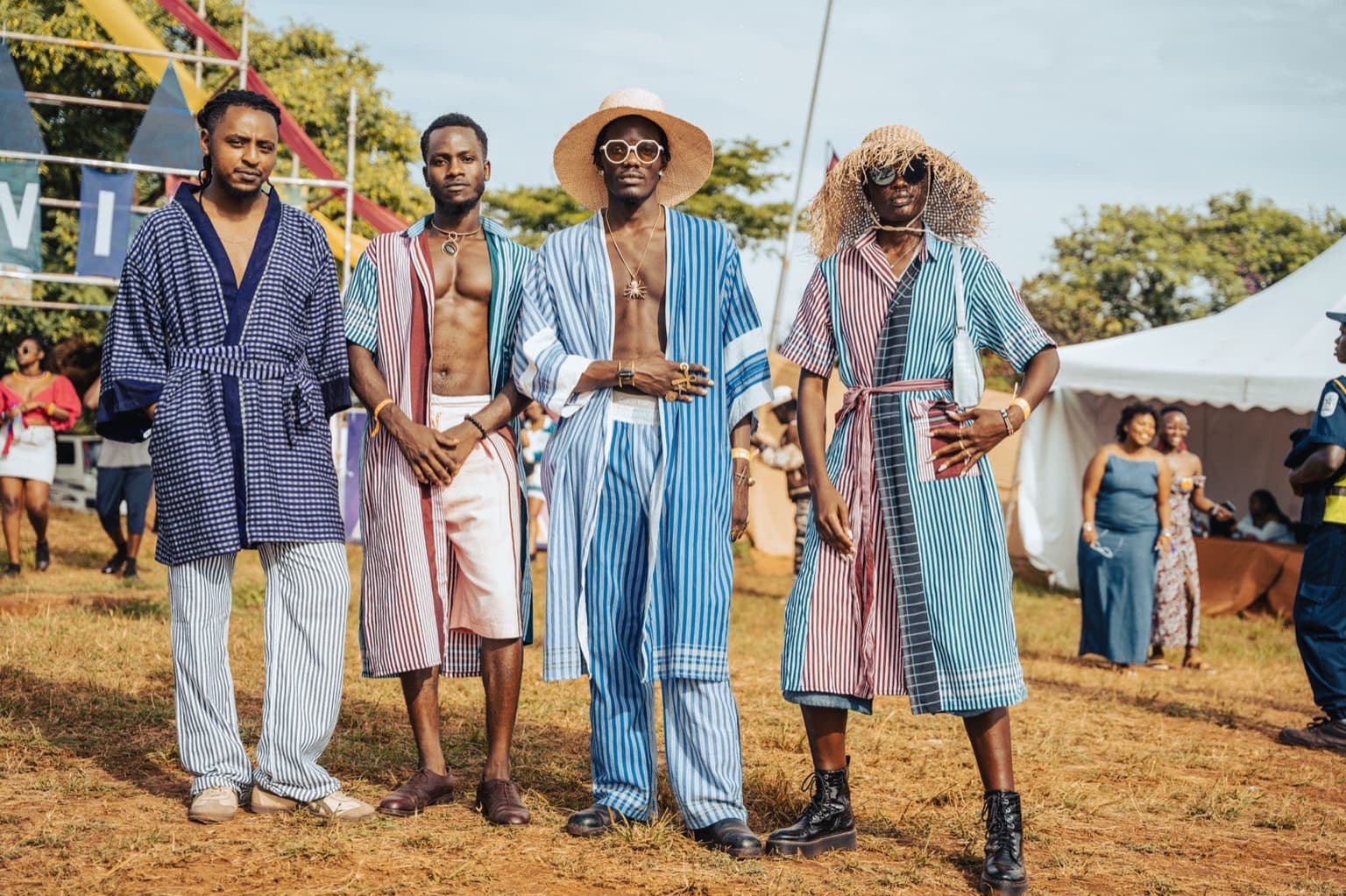
Hand-woven cotton cloth born on the Swahili Coast, passed between generations of fishermen, traders, and families. Originally a wraparound garment, Kikoy is characterised by vibrant stripes, a soft hand-feel, and the way it softens with every wash — like a garment learning your body.
We use Kikoy in our kimonos, wraps, and lightweight co-ords. The stripes become structural — each colour break becomes a design line. We source from coastal weavers directly, paying above market rate to support the craft.
Maasai Shuka
(Shuka)Maasai Mara — Kenya & Tanzania
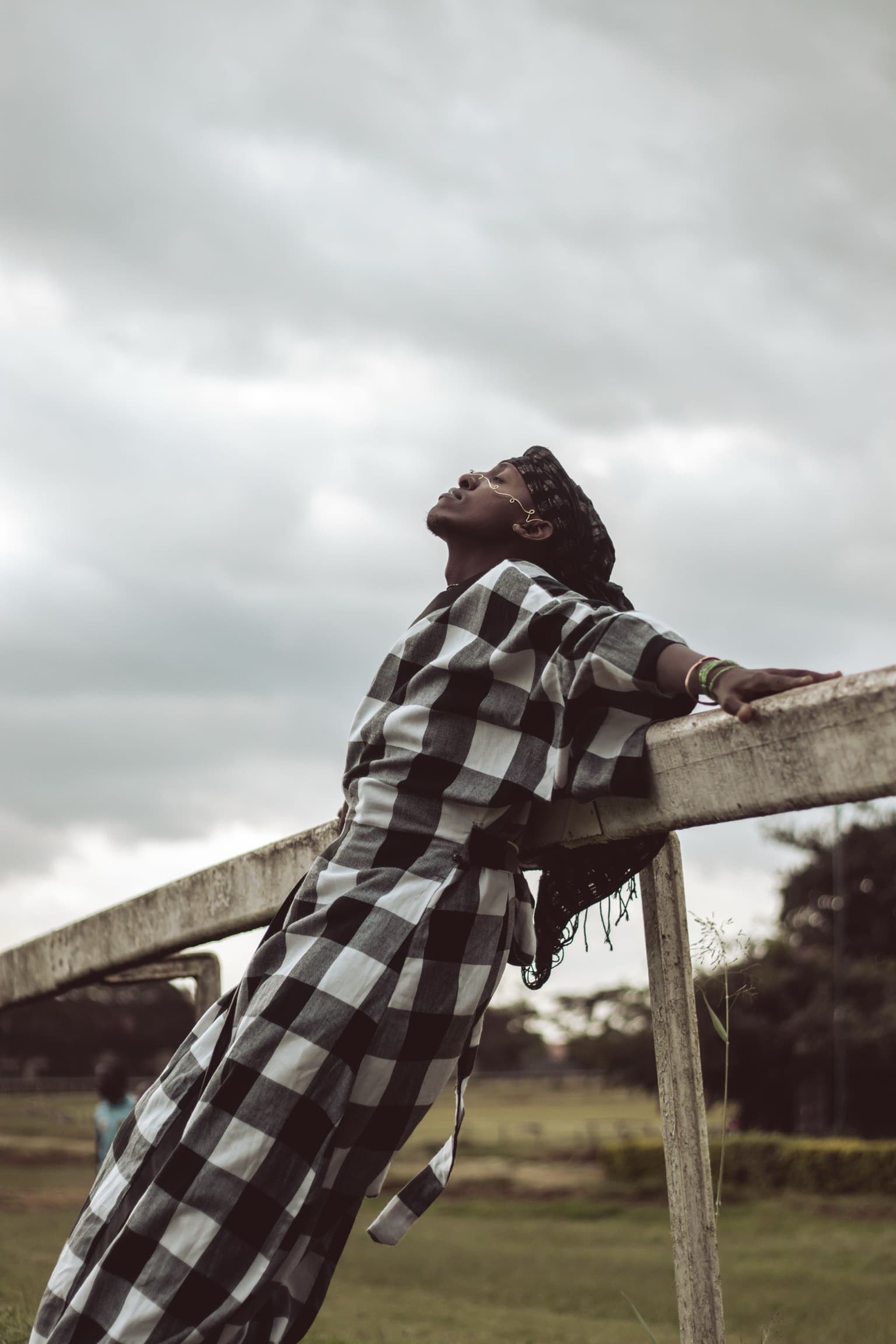
The iconic checked blanket-cloth of the Maasai people — red, blue, purple, woven into identity. Traditionally an acrylic-wool blend built to withstand the savannah, it drapes with weight and intention. Each colour carries meaning: red for bravery, blue for sky and rain, orange for warmth and hospitality.
Shuka gives our outerwear and heavyweight pieces their structure and warmth. The bold checks become the garment's personality — unmistakable from across a room. We work with Maasai-owned textile suppliers to keep the value chain within the community.
Kanga
(Khanga)East African Coast — Kenya, Tanzania, DRC
A printed cotton cloth worn by women across East Africa, always in pairs, always with a proverb (jina) printed along the border. Kanga is language made wearable — messages of love, protest, celebration, and wisdom passed through fabric. The prints are bold; the stories bolder.
Kanga brings narrative into our garments — the proverbs and patterns carry meaning that transcends decoration. We use it in our dresses, scarves, and ceremonial pieces. Every Kanga we source comes with a story; we pass that story on to the wearer.
Linen
(Kitani)Sourced globally, sewn in Nairobi
The oldest textile on Earth, and still the most honest. Linen wrinkles because it lives — each crease a record of movement. It breathes in Nairobi heat, layers in Amsterdam cold, and softens into something deeply personal over years of wear.
We use linen as a counterpoint to our heritage textiles — in shorts, pants, and linings. It's the quiet fabric that lets the bold ones speak. We don't fight the wrinkles. They're part of the story.
From source to skin
How a textile becomes a garment.
01
Source
We buy directly from weaving communities across Kenya, Tanzania, and Uganda — Kikoy weavers, Maasai textile co-ops, and regional linen suppliers. No middlemen. Fair prices. Named makers.
02
Design
Each collection starts with the textile — we push the design limits of what it can become. The stripes, checks, and prints dictate the silhouette. We are co-creating the black aesthetic on our own terms.
03
Cut & Sew
Our Nairobi workshop — staffed by women artisans — cuts and sews every garment by hand. Small batches, no assembly lines, no waste runs. Each piece is finished individually.
04
Wear
The garment lands on a body that gives it purpose. No gender. No season. No expiry date. Wear it until it's soft, until it's yours, until it carries your story alongside the maker's.
A note on sustainability
We are not an upcycling brand. We don't rescue textiles from landfill. Our fabrics were never waste — they are living heritage, woven by communities who have made them for centuries. We keep that craft alive by creating contemporary fashion from it, and by paying the people who make it what their work is worth.
Sustainability, for us, means keeping traditional craft economies viable. It means small batches, zero waste cuts, and garments built to outlast trends. It means the maker's name matters as much as the designer's.
How to care for your piece
Each textile has its own care ritual — washing, drying, storing. We wrote it all down.
Care Rituals →